Psychological safety at work rarely shows up on a balance sheet, yet it influences nearly every number leaders rely on to make decisions. When teams feel safe to speak honestly, question assumptions, and surface problems early, financial data becomes more accurate, risks are addressed sooner, and execution improves. When that safety is missing, even the most sophisticated financial models begin to drift away from reality.
Many organizations still operate under the assumption that financial rigor requires pressure, intensity, and constant scrutiny. The belief is that high standards come from fear of getting things wrong. In practice, the opposite often happens. Environments driven by fear tend to produce delayed reporting, softened bad news, and a reluctance to challenge flawed assumptions. Psychological safety at work creates the conditions where financial truth can emerge while leaders still have time to act.
Financial decisions are only as good as the data behind them. Psychological safety at work plays a direct role in whether information is shared fully, accurately, and on time. When people worry about blame or reputational damage, they unconsciously filter what they report. Numbers get adjusted to look safer. Assumptions go unchallenged. Forecasts become optimistic rather than realistic.
Teams that operate with trust approach data differently. They view reporting as a tool for shared understanding rather than personal evaluation. Errors are flagged earlier because doing so is rewarded, not punished. Variances prompt curiosity instead of defensiveness. Over time, this leads to stronger forecasting accuracy and tighter alignment between what the numbers say and what is actually happening inside the business.
Psychological safety at work also improves cross-functional data flow. Finance, operations, and people leaders share insights more freely when conversations are grounded in respect and openness. That transparency reduces surprises and allows leadership teams to respond with speed and confidence.
Risk rarely appears suddenly. It builds quietly through small signals that are easy to ignore when speaking up feels unsafe. Psychological safety at work changes how those signals are treated. Teams with high trust raise concerns earlier because they believe their input will be taken seriously. That early visibility gives leaders more options and lowers the cost of course correction.
In low-trust environments, risks tend to surface only after they become unavoidable. Issues are escalated late, framed cautiously, or hidden behind partial explanations. By the time leadership becomes aware, financial impact has already occurred. Missed targets, unexpected expenses, and stalled initiatives often trace back to moments when someone noticed a problem but chose silence over discomfort.
Psychological safety at work encourages healthy dissent. Leaders hear alternative viewpoints before decisions are finalized. Assumptions are stress-tested, and blind spots are exposed while there is still room to adjust. This dynamic strengthens accountability without increasing control, creating resilience rather than rigidity.
Psychological safety at work does not emerge from policies or slogans. It is shaped through everyday leadership behaviors. How leaders respond to questions, mistakes, and uncertainty sends a constant signal about what is truly safe to say.
Leaders who model curiosity create space for learning. When questions are welcomed and explored, teams feel permission to think critically instead of defensively. When leaders admit what they do not know, others follow suit, creating a culture where accuracy matters more than appearance.
Consistency also matters. Psychological safety at work erodes quickly when reactions are unpredictable. Calm responses to bad news reinforce trust, while emotional or punitive reactions shut down communication. Over time, teams learn whether honesty leads to problem-solving or personal risk.
Strategic transparency further strengthens this environment. When leaders explain how decisions are made and how data is used, people understand the purpose behind reporting. That clarity aligns effort and reduces fear, reinforcing the idea that financial insight exists to support better outcomes, not assign blame.
The connection between psychological safety at work and financial performance becomes clearer over time. Accurate data leads to better forecasting. Early risk identification reduces costly surprises. Faster learning cycles improve execution and capital efficiency.
Teams operating with trust also adapt more effectively during periods of change. Uncertainty increases the need for open dialogue, yet it is often when fear is highest. Psychological safety allows organizations to navigate complexity without freezing or fragmenting. Decisions are informed by reality rather than optimism or avoidance.

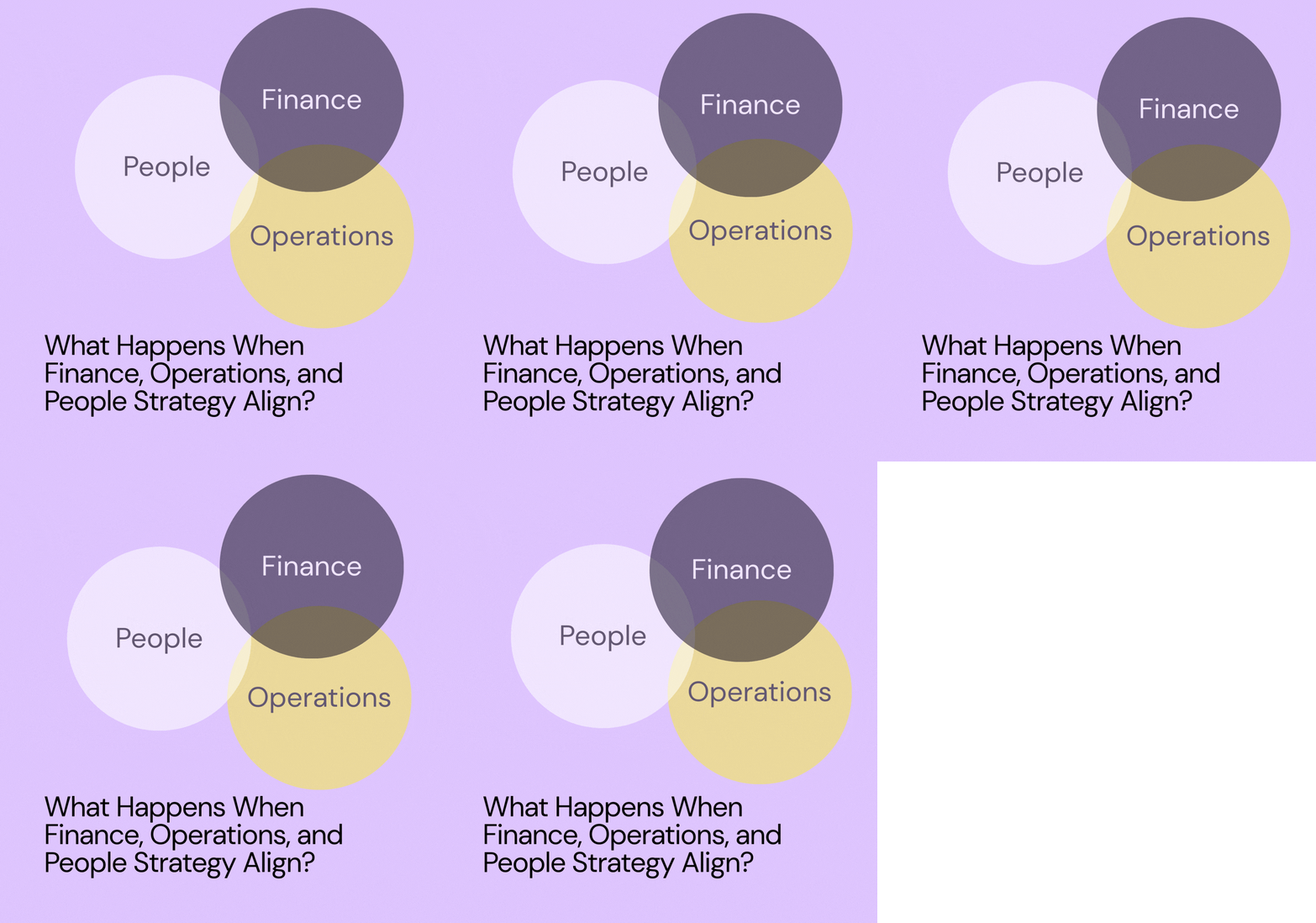
There is also a compounding effect. As trust grows, collaboration improves across functions. Finance gains better operational insight. Operations gain clarity on financial constraints. People leaders align development and accountability with strategic capacity. The result is a system where financial outcomes reflect collective intelligence rather than isolated effort.
Psychological safety at work should be viewed as a strategic asset, not a cultural add-on. It directly influences how well leaders see the organization and how effectively they can steer it. Without it, even strong leaders operate with incomplete information.
Building this environment requires intention. Leaders must reinforce behaviors that reward honesty, learning, and shared accountability. Over time, these behaviors become embedded in how decisions are discussed and executed.
Organizations that treat psychological safety as essential infrastructure gain a measurable advantage. They make better decisions, recover faster from setbacks, and sustain performance through change. Financial strength, in this context, is not separate from culture. It is built on it.
Psychological safety at work grows when leaders connect it directly to how the business operates. Financial reviews become conversations about insight rather than judgment. Operational challenges are framed as shared problems to solve. People systems reinforce growth and accountability together.
Leaders can start by examining how information flows today. Where does data get delayed, filtered, or softened? What conversations feel tense or avoided? These signals point directly to where safety is missing and where leadership attention can have the greatest impact.
At Enhance C-Suite, we see firsthand how trust-driven environments unlock better financial clarity and stronger execution. Our fractional leadership, data, and operational support help organizations create the conditions where honest insight drives confident decisions. When psychological safety and financial discipline work together, leaders gain what matters most: clarity, momentum, and results. Contact us today to build a culture where trust strengthens performance at every level.